
You put the phone down, tell yourself you're done, and pick it up again eleven minutes later without deciding to. If that loop feels weirdly outside your control, it's because — mostly — it is. Here's what's actually going on.
It's not about willpower
The instinct is to blame yourself: "I just need more discipline." But compulsive checking isn't primarily a willpower failure — it's a well-engineered response to specific psychological triggers. Understanding the mechanism makes it much easier to interrupt than trying to out-discipline it.
Variable rewards are the core mechanism
Every time you check your phone, you might get something good — a message, a like, something interesting in the feed — or you might get nothing. That unpredictability is the same mechanism slot machines use, and it's a well-documented driver of compulsive behavior: a variable reward schedule creates stronger, harder-to-break habits than a predictable one ever could. If your phone gave you the same notification every single time, you'd stop checking constantly. It's the maybe that keeps pulling you back.
Dopamine is about anticipation, not the reward itself
A common misconception is that checking your phone gives you a hit of pleasure from what you find. Actually, dopamine spikes mostly happen in anticipation — the moment right before you check, not from the content itself. That's why checking can feel compulsive even when the payoff is almost always boring: your brain is chasing the "maybe this time" feeling, not the actual result.
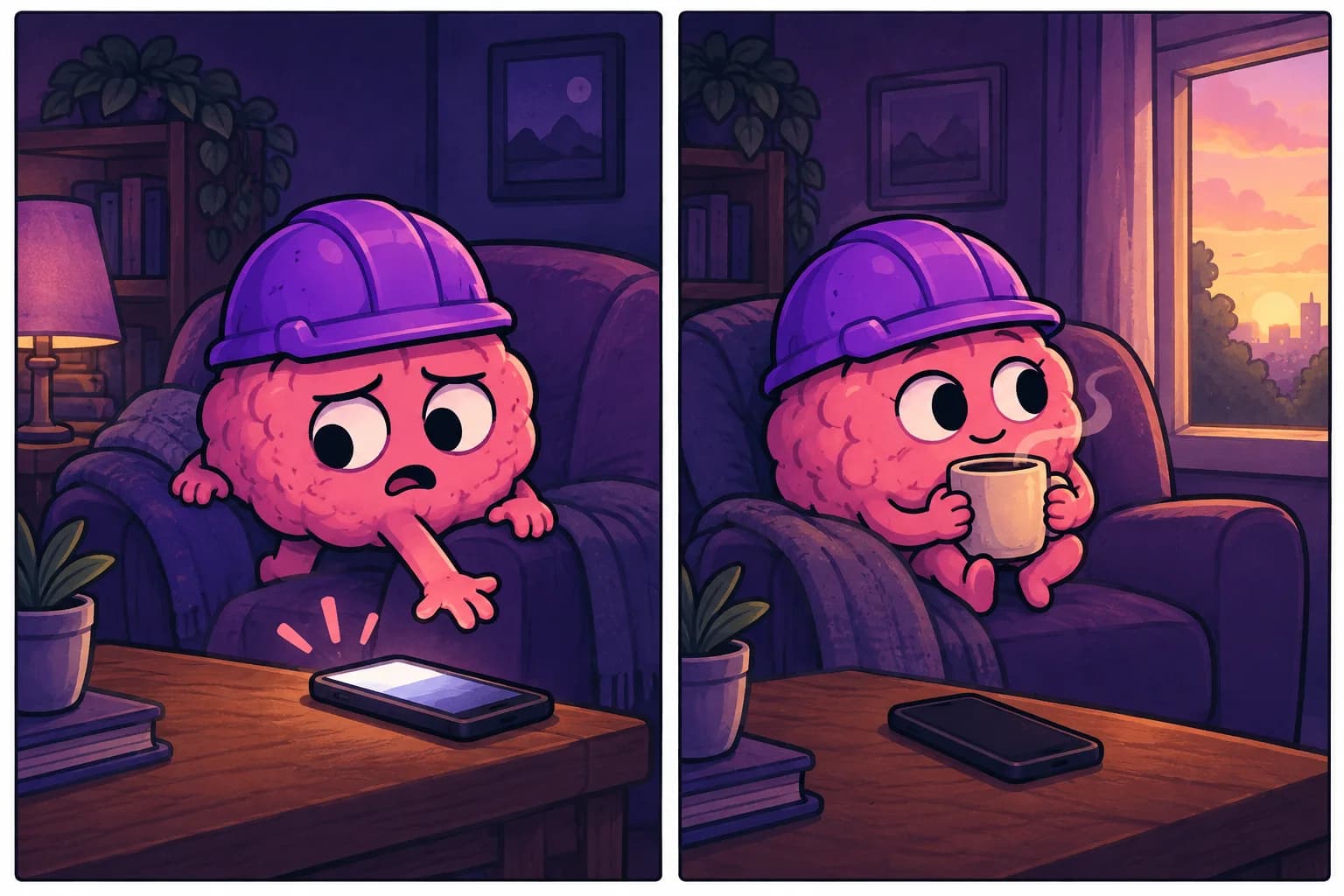
Boredom is a bigger trigger than you'd think
A lot of phone checks aren't triggered by needing something — they're triggered by a split-second of unoccupied attention. Standing in line, a pause in conversation, waiting for a page to load. The phone has become the automatic answer to any gap in stimulation, which is why it can feel like your hand moves before you've consciously decided anything.
Why this isn't really about the specific app
The pull isn't really about any one app — it's the checking behavior itself that's compulsive. This is why the useful move is making your phone boring on purpose rather than trying to white-knuckle your way past just one app; the reflex will find the next-most-interesting thing if you don't change the underlying pattern.
What actually helps, once you know the mechanism
Understanding why doesn't make the pull disappear, but it changes the approach: instead of fighting a "weakness," you're disrupting a specific, well-understood loop. That's the whole idea behind interrupting the reflex with something concrete to do instead — see what to do instead of scrolling for the practical version of this.
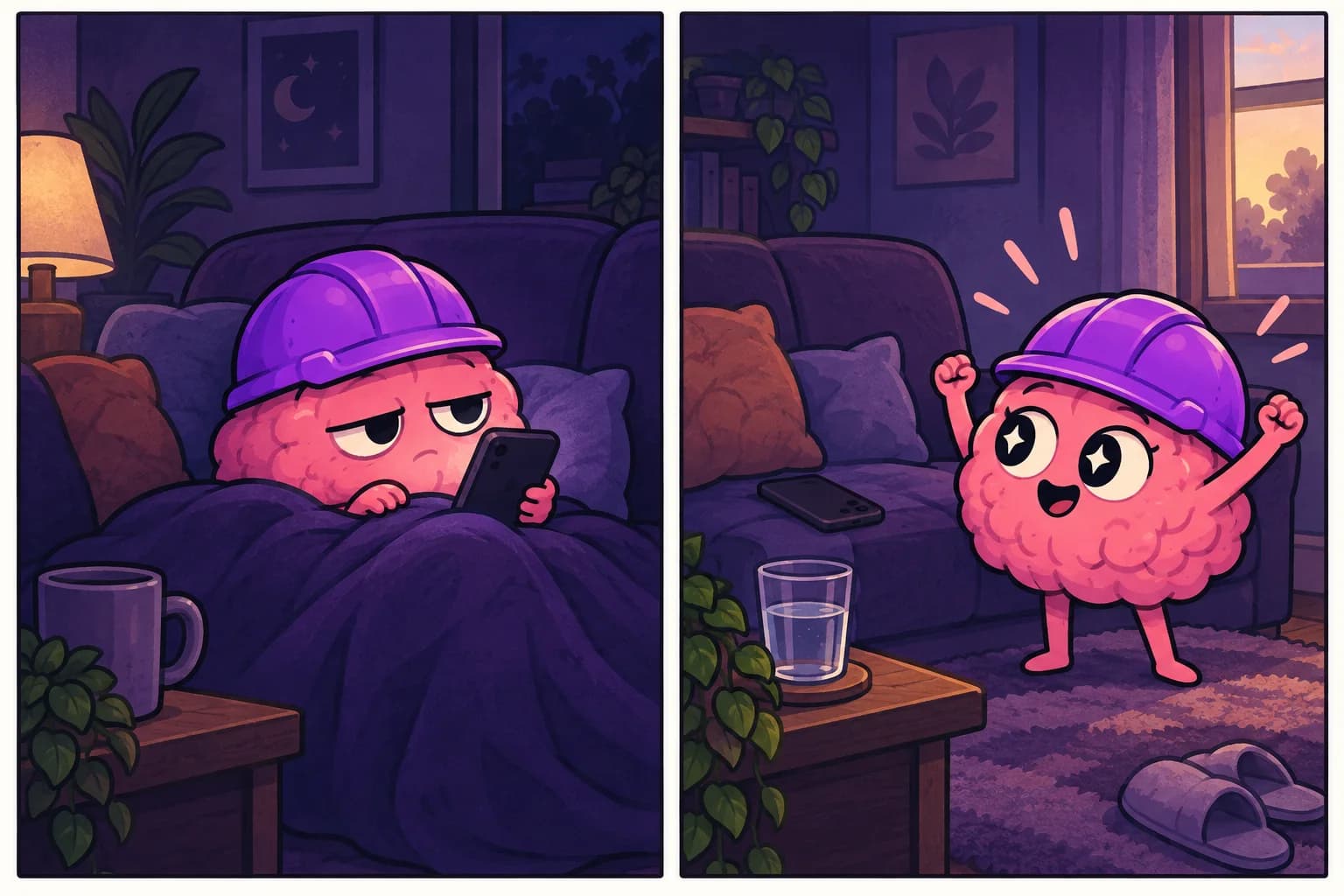
The redirect, not the block
UghOkay doesn't try to fight the checking reflex with willpower or blockers — it gives you one small, specific thing to do in the exact moment you'd otherwise open the feed. Same reflex, different destination.
FAQ
Is phone checking actually addictive in a clinical sense? The mechanisms involved (variable rewards, dopamine anticipation) overlap with those in other compulsive behaviors, though "addiction" as a formal clinical term is debated. Either way, the pull is real and mechanism-driven, not a character flaw.
Why do I check my phone even when I know there's nothing new? Because the checking itself, driven by anticipation and habit, doesn't require an actual reason — it's become close to automatic, independent of whether you consciously expect something.
Does turning off notifications fix this? It helps by removing external triggers, but the internal habit loop (boredom → check) often persists even with notifications off — which is why environment changes and having an alternative matter too.