
A lot of digital minimalism advice reads like a boot camp: 30-day detoxes, dumbphone switches, strict no-phone-before-noon rules. If that style makes you want to do the opposite out of pure stubbornness, you're not alone — and you don't actually need it to cut down on screen time.
Why rigid systems tend to fail
Strict rules work great until the first time you break one — then the whole system often collapses, because "no phone ever before noon" has no room for the one day you genuinely needed it at 9am. All-or-nothing rules create all-or-nothing outcomes: perfect compliance or total abandonment, with nothing useful in between. That's a fragile way to build a habit that's supposed to last.
A looser starting principle
Instead of a rule, try a default: "the phone isn't my first move when I'm bored or between things." That's not a hard boundary you can break — it's a general lean you can return to, over and over, without the guilt spiral of "I broke the rule, might as well give up." Defaults survive bad days. Strict rules don't.
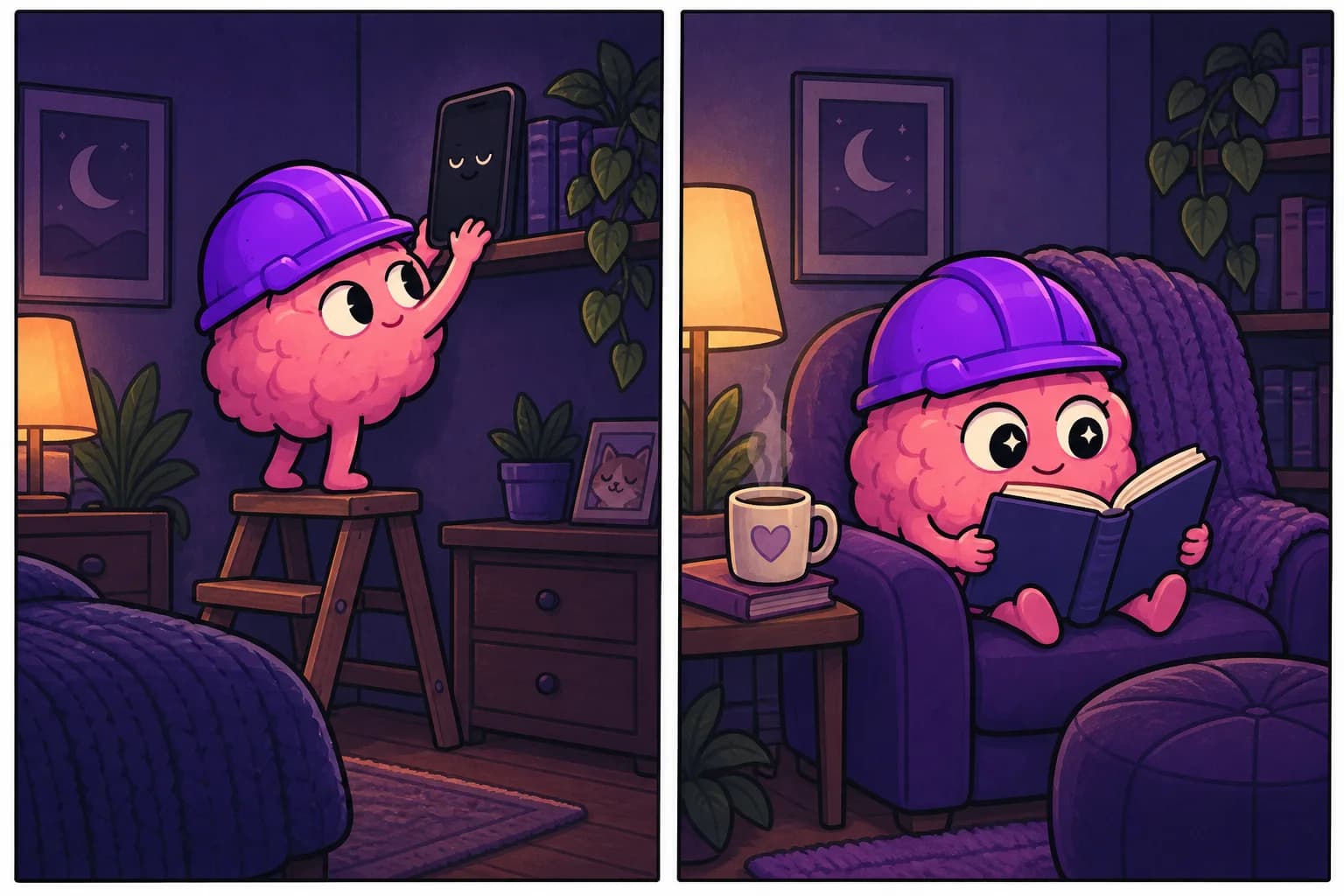
Change the environment instead of policing yourself
The lowest-friction version of digital minimalism isn't a rule you enforce with willpower — it's a setup that makes the boring choice slightly easier than the tempting one. Moving apps off your home screen, turning on grayscale, logging out so re-entry takes a beat — see how to make your phone boring for the specifics. None of that requires discipline in the moment; it just quietly shifts the path of least resistance.
Skip the detox, keep the awareness
A 30-day full detox sounds impressive but often teaches you very little about your actual patterns — you just white-knuckle a month and then, predictably, snap back afterward. A gentler version: keep using your phone normally, but start actually noticing when and why you reach for it. Awareness alone changes behavior more than a temporary ban that ends the moment it's over.
Replace, don't just remove
Rule-based minimalism is usually about subtraction — no this app, no phone during that time. A version that's easier to sustain adds something back in: one small alternative thing to reach for instead, so removing the phone doesn't leave a blank, uncomfortable gap. See what to do instead of scrolling for ideas that fill that space without requiring a full replacement hobby.
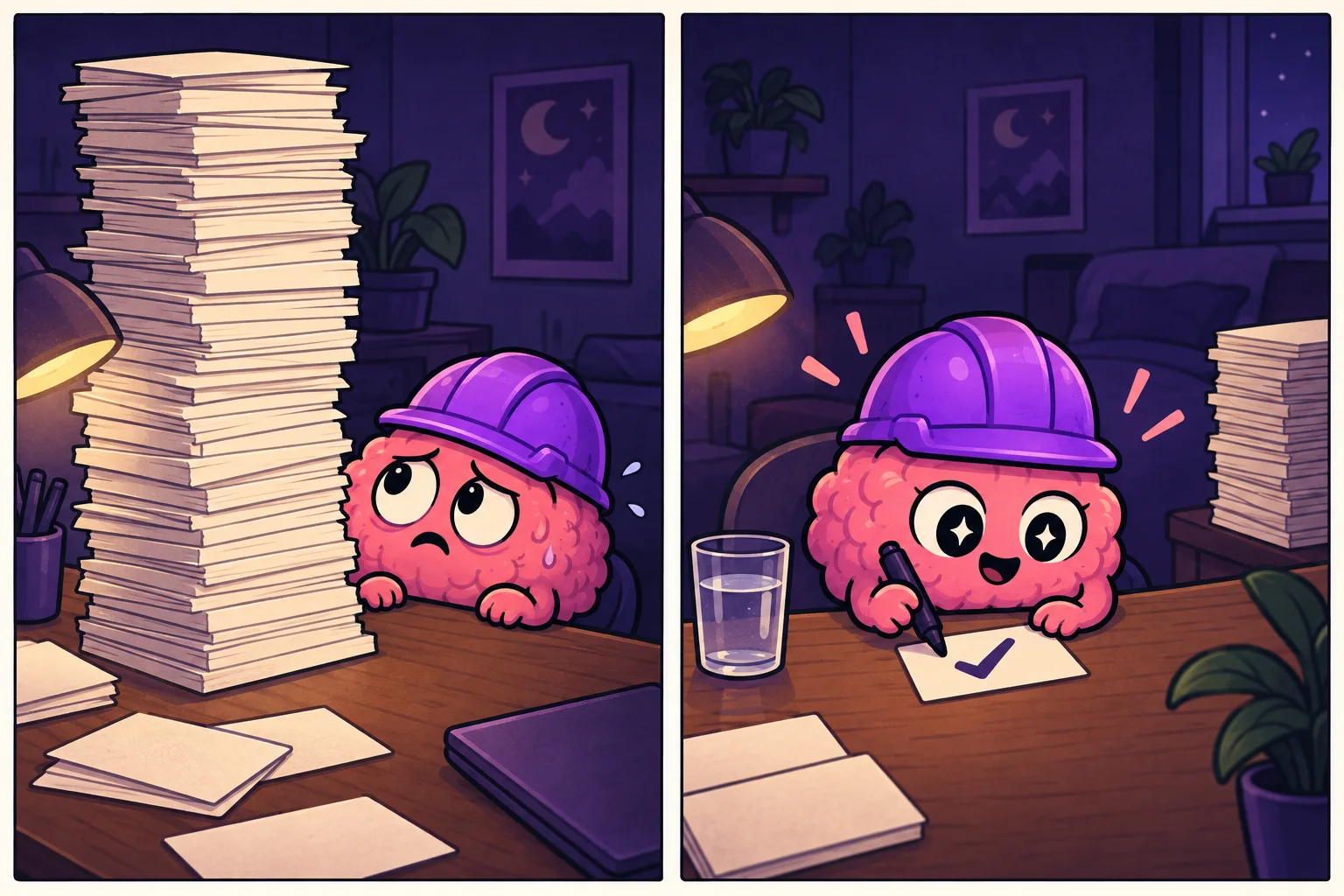
It's fine to be inconsistent
A rules-driven system treats an off day as a failure. A defaults-driven system treats an off day as, well, a day — you just come back to the default tomorrow, no ceremony required. This isn't lower standards; it's a structure that survives contact with actual, inconsistent human life, which is exactly what rigid systems don't do.
What this looks like day to day
No timers you have to beat, no streak to protect, no detox calendar. Just a general lean away from the phone as a default, a slightly more boring home screen, and something small to reach for when the urge to scroll shows up.
Built for the loose version, not the boot camp
UghOkay isn't a blocker or a strict rule engine — it's a redirect for the exact moment you'd otherwise open a feed, with zero guilt mechanics if you skip a day. Digital minimalism without the rulebook.
FAQ
Isn't a loose approach less effective than strict rules? Not necessarily — strict systems often produce short bursts of compliance followed by total abandonment. A looser, sustainable approach tends to hold up better over months.
Do I need to fully quit an app to count as "digital minimalism"? No. Reducing automatic, mindless use while keeping the app for its genuinely useful purposes is a completely valid version of minimalism.
What if I miss a day of trying to cut back? Nothing resets. Pick the default back up the next time you notice — there's no streak to have broken.