
The usual advice is "just resist the urge." If that worked reliably, you wouldn't be reading this. Urges are a specific, short-lived physiological event, and there's a more effective way to deal with them than gritting your teeth.
Urges are shorter than they feel
An urge to check social media typically peaks and fades within a few minutes if you don't act on it — it's not a permanently rising pressure that only relief can stop. It feels like it'll build forever, but that feeling is misleading. Knowing this changes the strategy: you're not suppressing something indefinitely, you're just riding out a short spike.
The "urge surfing" idea
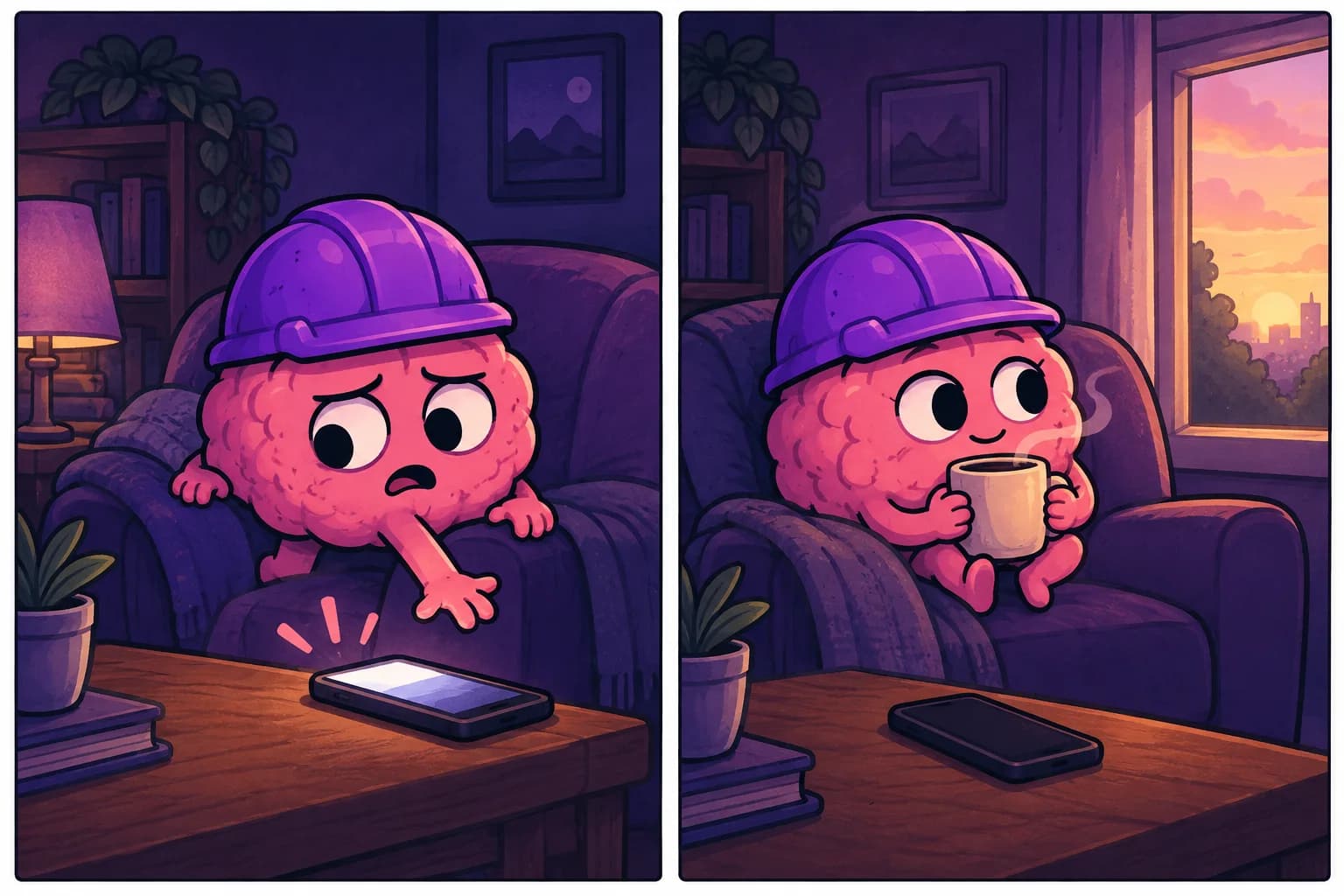
Instead of fighting the urge or immediately giving in, try observing it: notice where you feel it (a restlessness, a pull toward your pocket), and just watch it without acting — like a wave you're riding rather than a fight you're having. Most people are surprised how quickly it crests and drops once they stop struggling against it and just let it run its course.
Give it a name, not a fight
Instead of "I must not check Instagram," try noticing neutrally: "there's the urge again." Naming it as a passing event, rather than treating it as a battle to win or lose, takes a surprising amount of the charge out of it. You're not proving anything by resisting harder — you're just letting a normal, temporary sensation pass.
The 10-minute delay trick
If pure urge-surfing feels too abstract, try a concrete version: tell yourself you can check in 10 minutes, no negotiation needed. This does two things — it removes the immediate all-or-nothing pressure ("check now or never"), and it gives the urge time to fade on its own before the 10 minutes are even up. Often you'll find you don't actually want to check anymore once the timer's done.
Have something ready for the gap
An urge with nowhere to go often just resolves into checking anyway, out of default. Having one small, ready thing to do in that gap — even something trivial — gives the moment somewhere else to land. That's a big part of why what to do instead of scrolling works better than pure willpower: it's not fighting the urge, it's redirecting it.
Why this beats blocking apps for some people
App blockers remove the option entirely, which works for some people and feels like a wall for others — leading to workarounds (a second account, a browser tab, uninstalling and reinstalling). Urge-surfing doesn't require removing the option; it works with the urge's natural, short lifespan instead of trying to eliminate temptation altogether. Neither approach is universally better — it's worth knowing both exist.
Practice makes it faster, not perfect
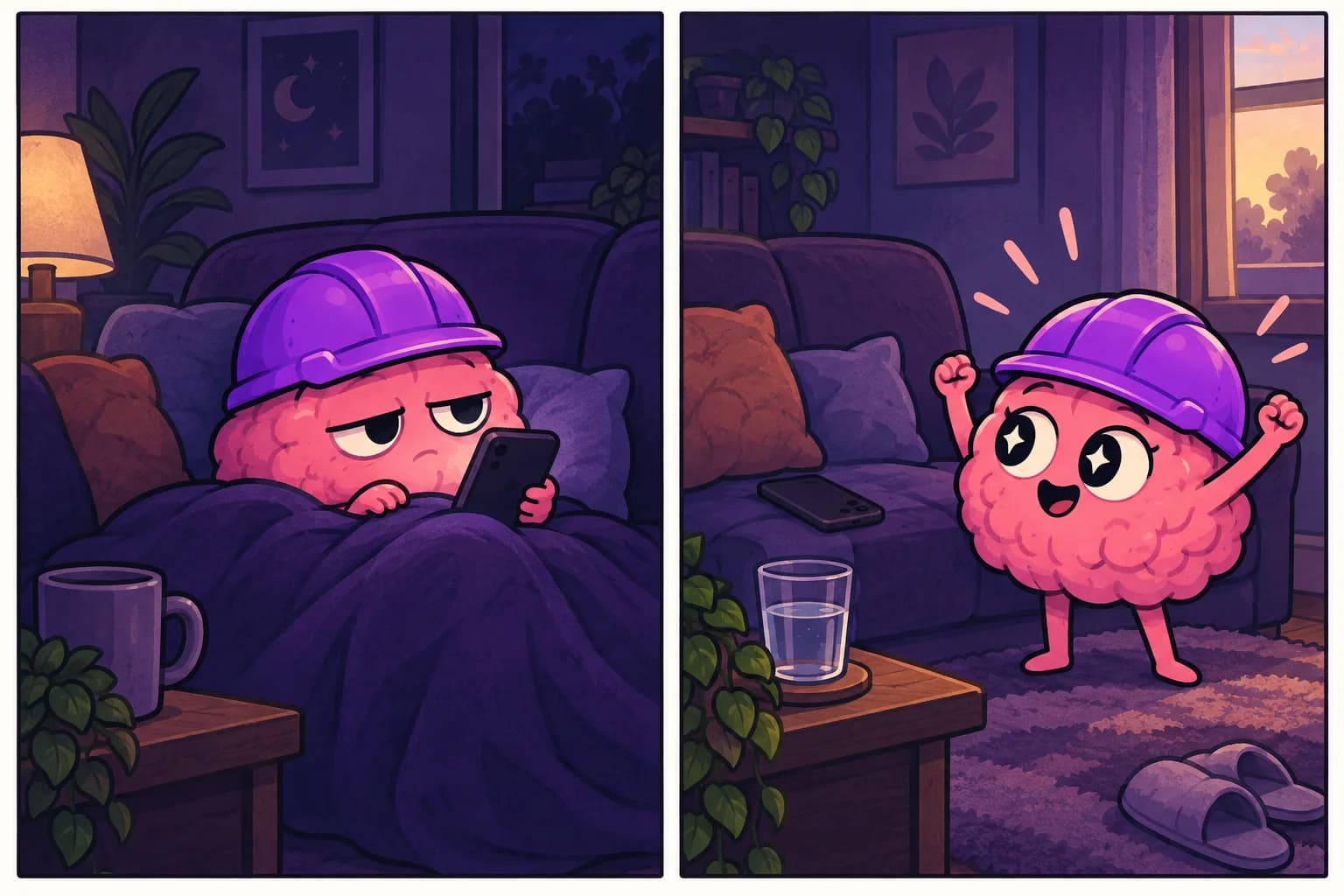
The first few times you try riding out an urge instead of acting on it, it'll feel effortful and slow. With repetition, most people find the urge fades faster and with less friction — not because willpower got stronger, but because the pattern of "urge passes without action" becomes familiar instead of novel.
A landing spot for the urge
UghOkay exists for exactly the moment an urge shows up and you want somewhere else for it to go — one small, ready thing to do instead of opening the app, so the redirect is as automatic as the urge itself.
FAQ
How long does a social media urge actually last if I don't act on it? For most people, urges peak and noticeably fade within a few minutes — much shorter than it feels in the moment.
Isn't ignoring an urge just suppression? Not quite — suppression means fighting it and pretending it's not there. Urge surfing means acknowledging it exists and letting it pass on its own, which tends to work better long-term.
What if the urge comes back right after it fades? That can happen, especially early on. Each time it does, the same approach applies — notice it, let it run its course. It gets easier with repetition.