
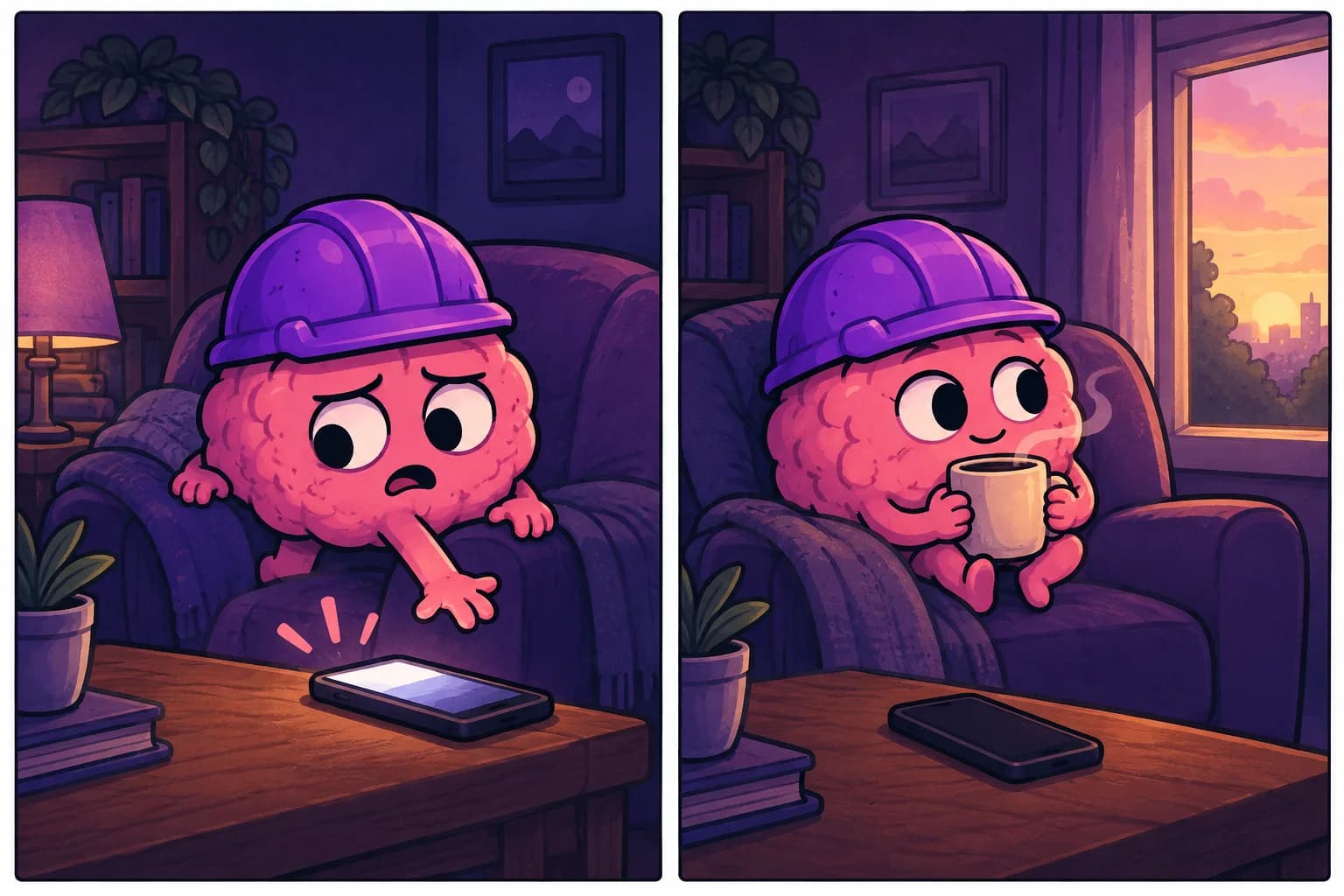
There's a specific kind of restlessness that shows up about four seconds into a boring moment — waiting in line, an ad break, a pause in conversation — where your hand is already moving toward your phone before your brain has even registered you were bored. That's not a personal failing. That's what constant stimulation does to your tolerance for having nothing happen.
Boredom tolerance is a skill, and it atrophies
Like most skills, tolerating boredom gets worse with disuse. If every idle moment for the last several years has been immediately filled with a feed, the mental muscle that used to just... sit there and let a boring moment be boring has had almost no reps. It's not that you got weaker-willed. It's that the moment got outsourced to a phone before it ever had to be endured.
Why your brain hates the gap so much
A boring moment is, technically, a gap with no immediate reward. Your brain, trained on years of instant micro-rewards from a feed, treats that gap as almost aversive — not painful exactly, just uncomfortable enough that filling it feels urgent. The urgency is the tell. It's not that the boring moment is actually bad. It's that the contrast with constant stimulation makes it feel bad by comparison.
What happens if you let it just be boring
Something people rediscover, usually by accident, is that a boring moment left alone for 30-60 seconds doesn't actually escalate into anything unbearable. It peaks early, then it just... is what it is. Most people never find this out because they reach for the phone at second four, well before the discomfort would have leveled off on its own.
A small way to practice
You don't need to swear off your phone during every idle moment forever. Pick one specific, low-stakes boring window — the elevator, the microwave running, one specific line you stand in regularly — and let it be boring on purpose, hands off the phone, just this once per day. It's not a big commitment. It's a rep, and reps are how the tolerance comes back.
Boredom used to lead somewhere
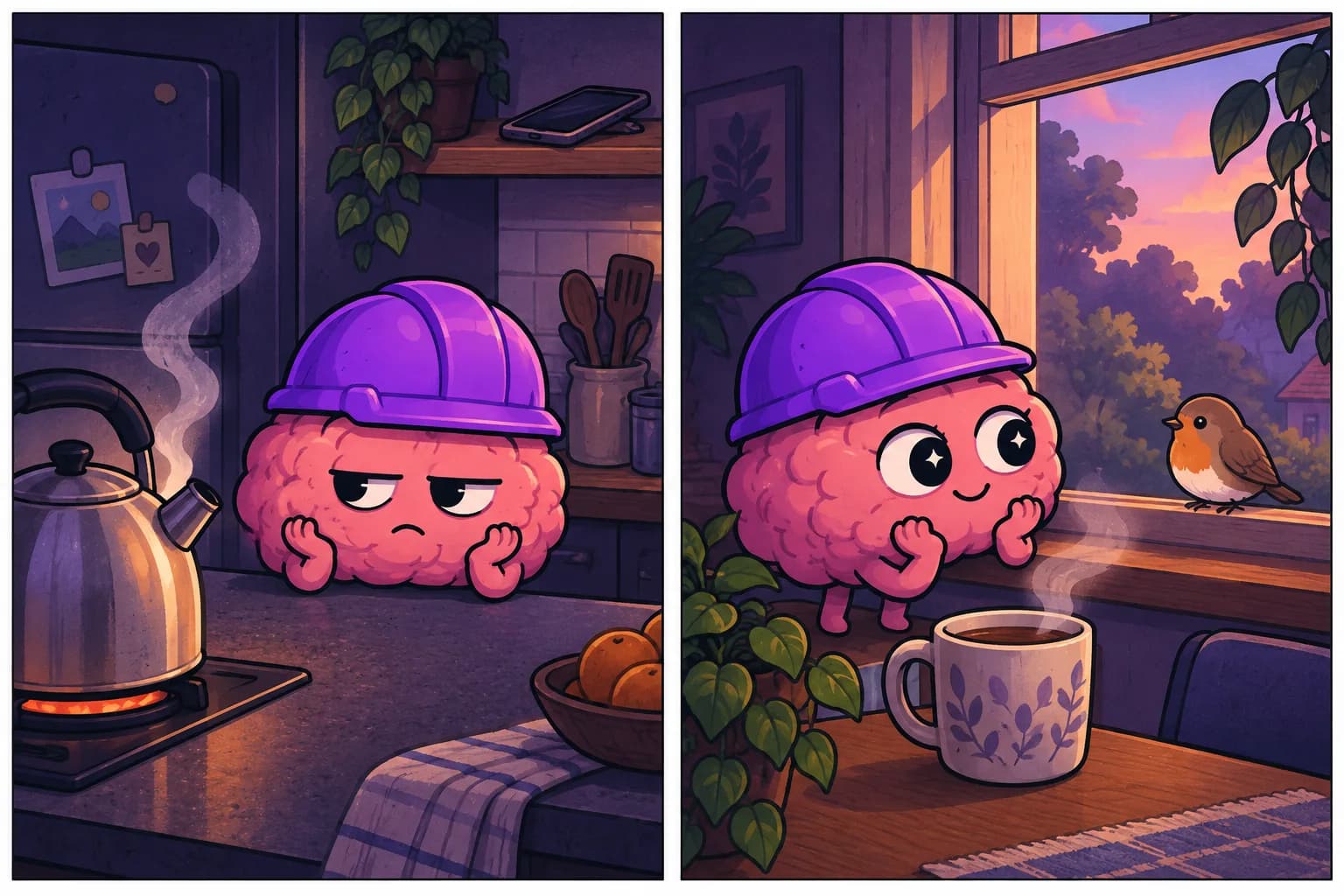
Before it got treated as a problem to be immediately solved, boredom was often the space where actual thoughts happened — the stray idea, the thing you'd been meaning to think about, the daydream that goes somewhere useful. That doesn't happen in the four seconds before you reach for your phone. It happens in the minute after, if you let there be one.
It's not about willpower
Rebuilding boredom tolerance isn't a discipline project — it's closer to physical therapy for a muscle that's been in a sling. Small, repeated, low-pressure exposure to unfilled time, without treating the discomfort as an emergency. It comes back faster than you'd expect, and it makes the whole rest of your day feel less urgent once it does.