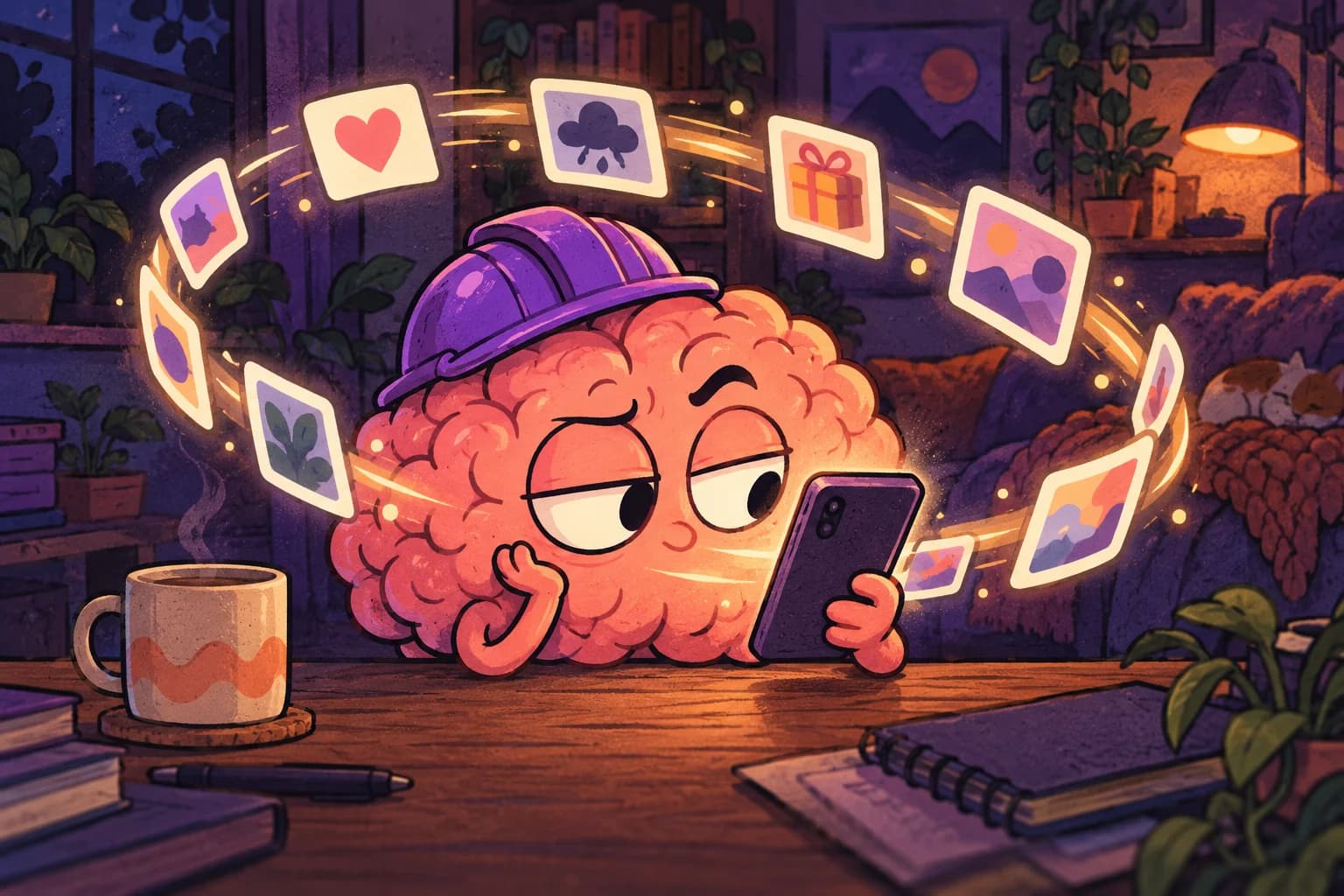
The strange thing about doomscrolling is that it rarely feels good while it's happening, and you keep doing it anyway. That's not a contradiction — it's actually a pretty accurate description of how the loop is built. Understanding the mechanism doesn't make it disappear, but it does make it a lot less mysterious.
It's about "what's next," not about enjoying this
Dopamine, contrary to its reputation, is more about anticipation and seeking than about the pleasure of what you actually find. Every downward swipe is a tiny bet — maybe this next post is the interesting one — and the possibility is what keeps the thumb moving, regardless of how the last five posts actually felt. This is why you can feel bored and unsatisfied by the content itself and still keep scrolling: the loop isn't being driven by satisfaction, it's being driven by the next unopened box.
Why "bad" content still keeps you scrolling
Doomscrolling specifically involves content that's often upsetting, and it still holds attention — because the seeking mechanism doesn't require the content to feel good, only for it to feel unresolved or urgent. Bad news is unusually good at feeling both. There's always a next update, a next detail, a next reaction, which keeps the "what's next" hook engaged even while the actual experience is unpleasant.
Why stopping feels harder than it should
Once the loop is running, deciding to stop requires overriding an active seeking response, not just declining a single choice. That's a different, harder kind of stopping than turning down a snack you're not hungry for — it's closer to interrupting a process already mid-motion. This is why "just stop" so rarely works in the moment; the moment to intervene effectively was actually a few swipes earlier, before the loop fully spun up.
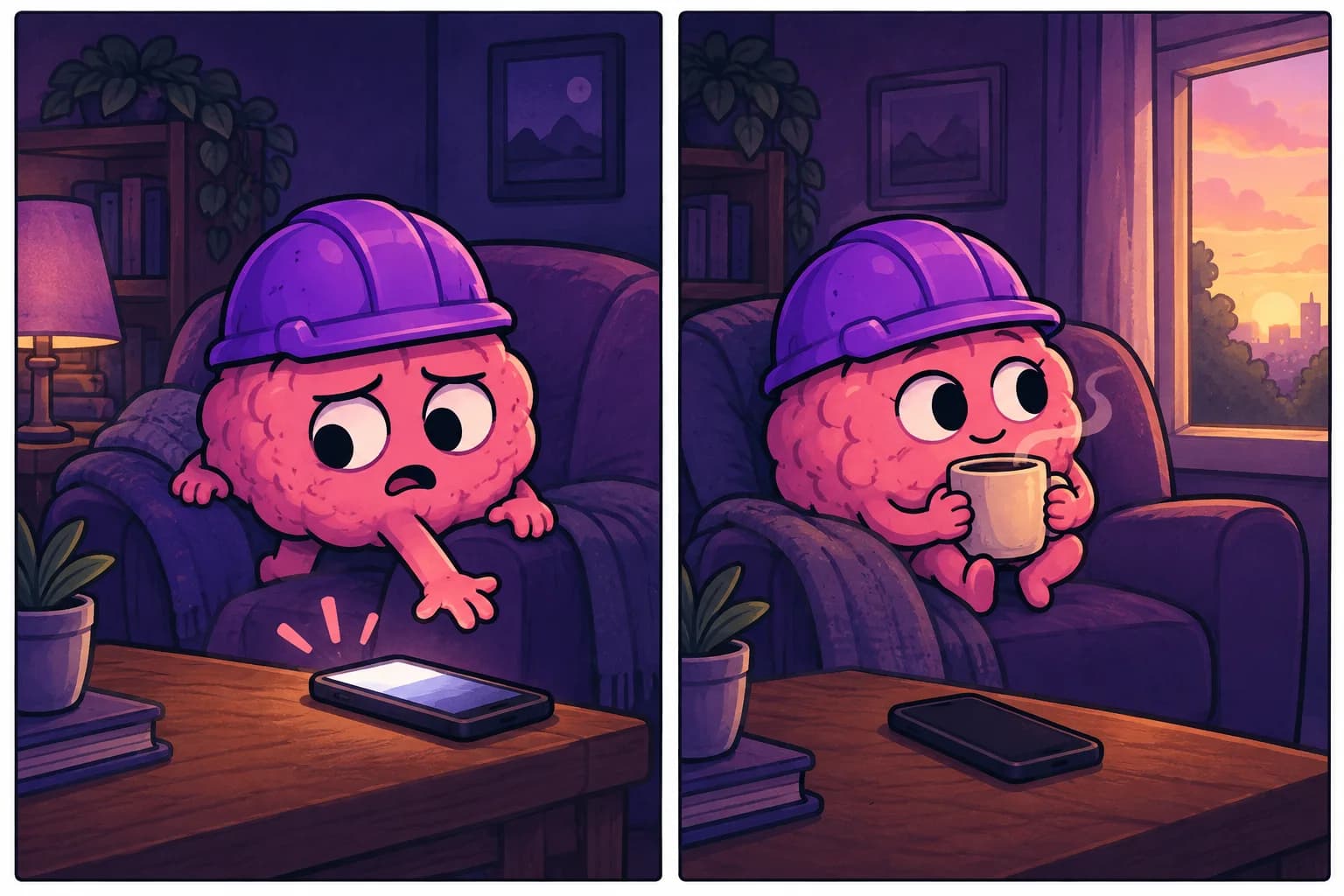
The interruption has to happen at entry, not exit
Because stopping mid-loop is hard, the more reliable move is making the starting moment harder instead — the reach for the app, the first open. Removing a one-tap shortcut, adding a small delay, moving the app off the home screen: none of these stop you from scrolling if you're determined, but they interrupt the automatic entry into the loop, which is a much easier fight to win than stopping once it's already running.
Knowing this doesn't make you weak-willed
If doomscrolling feels hard to stop even when you clearly want to, that's the mechanism working as designed, not a personal shortfall. The loop isn't defeated by feeling bad about being in it — feeling bad is usually just more content for the loop to process. It's interrupted by changing something structural about how easy it is to enter in the first place.
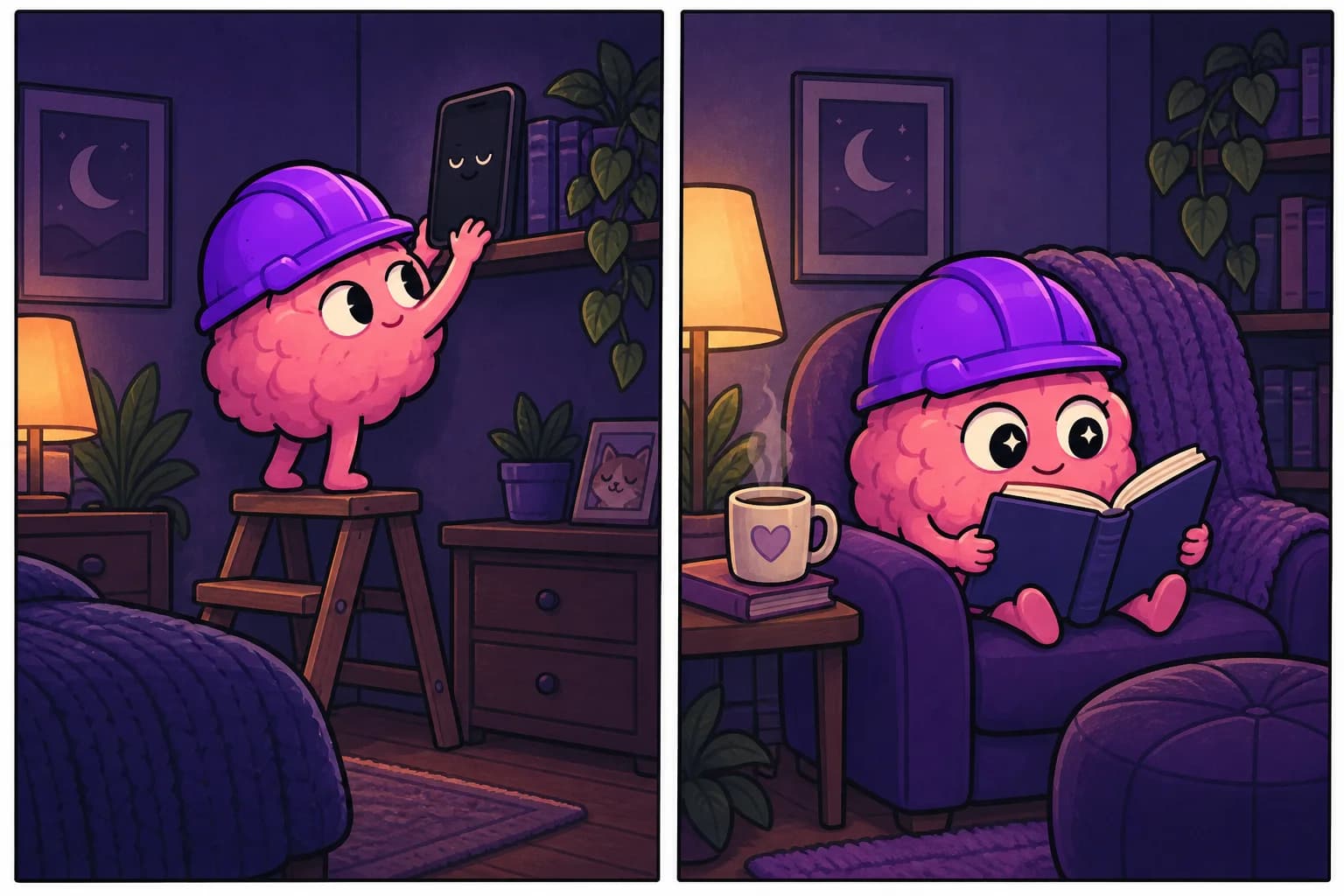
Small structural changes beat willpower here
None of this requires understanding neuroscience deeply to act on. It just means: the fix that actually works is usually upstream of the scrolling itself — friction at the reach, not effort at the exit. Once the entry gets a little harder, the loop has fewer chances to start, and you don't have to fight your way out of it nearly as often.